Approve samples
Identify format, revision, finish, source, batch and known natural variation.
Use representative parts and agreed acceptance criteria to turn feeding assumptions into observable production evidence.
A valuable centrifugal feeder trial covers bulk loading, repeated circulation, component variation, sustained output, normal stops and recovery at the planned discharge condition.
Identify format, revision, finish, source, batch and known natural variation.
Show the accepted orientation, tolerance, spacing and point at which the rate is measured.
Test beyond a short demonstration with realistic bowl level and normal replenishment.
Observe full track, low level, blocked outlet, stop, restart and abnormal component states.
Capture rate, interventions, observations and open actions for the final specification.
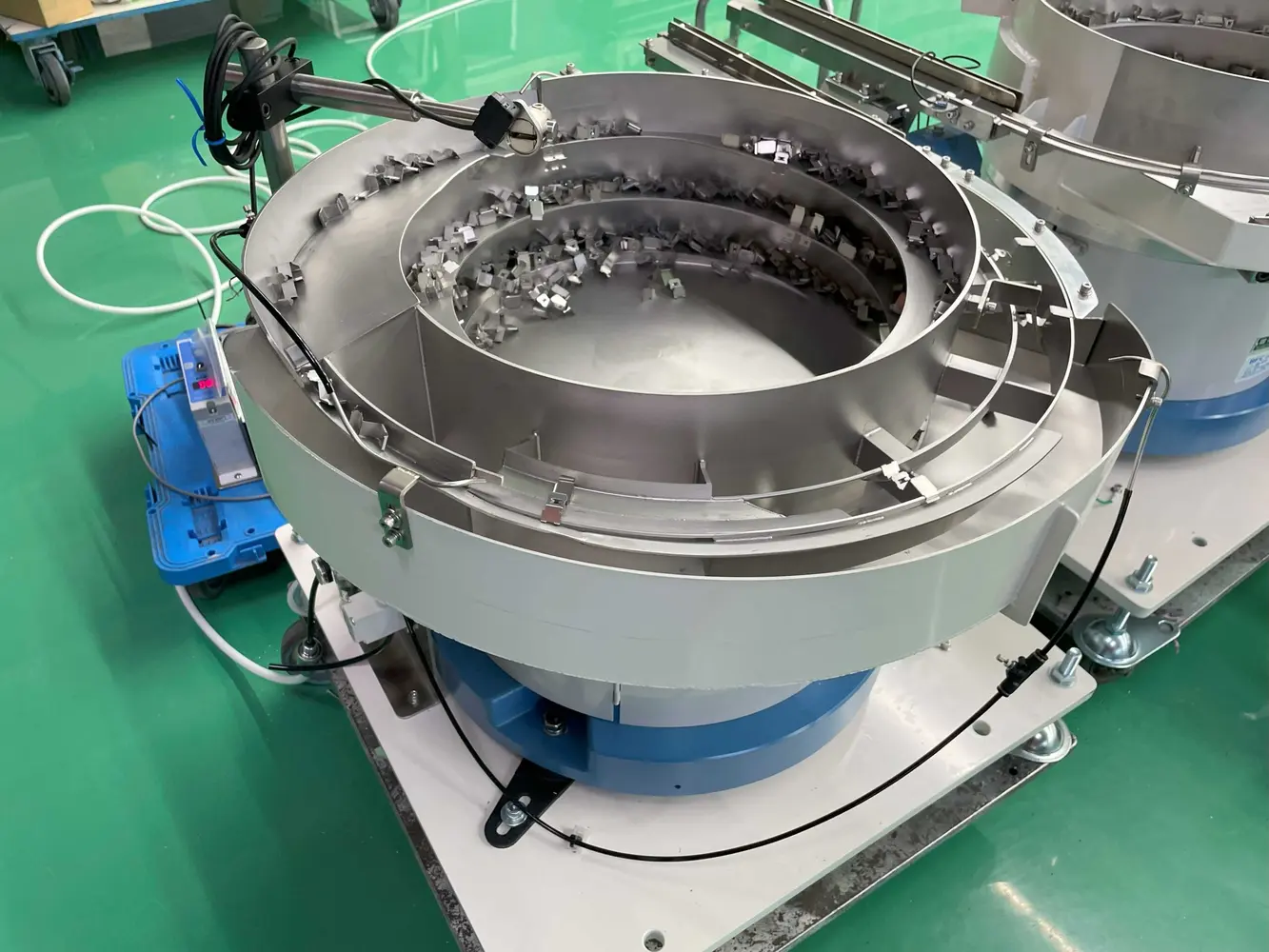
Perfect samples can conceal the behaviours that determine system reliability. Include normal production variation, multiple batches and every expected component format.
The record becomes the technical bridge between the initial concept, detailed design and factory acceptance test.
Correctly orientated parts per minute at the stated discharge point and test duration.
How consistently tooling selects correct parts and recirculates rejected states.
Whether repeat handling creates marking, tangles, dust, static or component damage.
Track fill, back pressure, gap recovery and response to downstream demand changes.
Every manual adjustment, jam clearance or refill needed during the test period.
Remaining design questions, owners and the evidence needed before final acceptance.
“Correct orientation” must be observable. Mark the face, axis, leading feature, positional tolerance and gap that the receiving machine can accept. If the feeder hands off to a nest or gripper, include interface drawings and product contact constraints.
The test should state duration, sample quantity, normal replenishment, downstream simulation and permitted interventions. A high instantaneous count is not equivalent to stable production delivery.
The factory acceptance test should reflect the agreed component set and production boundary. Typical checks include rate, orientation, full-track response, low-level alarms, stop/restart, sensor faults, guard opening, changeover and documented actions.
Label every sample container with part number, revision, batch, material and source. Retain approved parts for build comparison and record any later component changes so tooling is not judged against an unknown sample.
Regulated or high-variation projects may need additional contact, cleaning, inspection and evidence controls. See the medical component feeder and automotive component feeder application guides.
Where information is missing, the right output is a clearly recorded open action—not an optimistic assumption hidden inside the quotation.
The quantity must fill the working system, support recirculation and allow a sustained rate test with normal replenishment. The exact quantity depends on part size, bulk density, hopper capacity and test duration.
Yes. Include every size, material, colour, revision, mould cavity or supplier source expected in production. If one format is unavailable, that limitation should remain open rather than being assumed away.
The agreed factory acceptance test may cover sustained accepted output, orientation, replenishment, full-track response, low-level recovery, blocked outlet, alarms, guarding, changeover and outstanding actions.
No. A small quantity can reveal basic geometry but cannot demonstrate bulk behaviour, circulation, natural variation, buffer stability or sustained production output.
Technical guide reviewed by Sortation Solutions · Updated 1 September 2026
A sustained centrifugal feeder trial becomes more informative when its output is recorded over time. One average rate can conceal repeated shortfalls followed by bursts of recovery. Ask for accepted parts to be counted in consistent time intervals while the feeder passes through normal depletion and replenishment, with the receiving-machine demand represented.
Annotate the record when fresh parts are added, the output track becomes full, or an intervention occurs. Keep the accepted-part count separate from parts that circulate or are rejected by orientation tooling. This makes it easier to see whether a promising headline rate depends on a narrow loading condition or whether the feed remains useful across the intended operating window.
Use the same record to compare component variants. A lighter format may behave differently from a visually similar heavier one, so a pooled average should not stand in for a result for each required format. The trial should finish with a stated operating range and any unresolved conditions. Share typical refill quantities and the receiving-machine cycle when arranging the test; those details determine which variation matters to production.
Intervals expose short starvation periods and recovery bursts that can be hidden inside a satisfactory overall average.
Yes when it is part of normal operation. Record the accepted output before, during and after replenishment under agreed conditions.
Review sustained high-speed parts feeding Define the centrifugal feeder specification
Define the component, orientation and delivery requirement, then provide samples that represent production variation. Ask the trial to record consistent presentation and component condition at discharge. Include replenishment and downstream pauses so the assessment covers the operating pattern and interface, not only an uninterrupted sample run.
Related guidance: medical component feeder · automotive component feeder
Send a part photograph or drawing, required orientation, target sustained output and details of the receiving machine. We will define the right next step.
Share a photograph or drawing, required orientation and target rate. The Sortation Solutions team will help identify the strongest feeding route.